
How to Get to Ilha Grande (from Rio, São Paulo, Paraty & Mangaratiba)
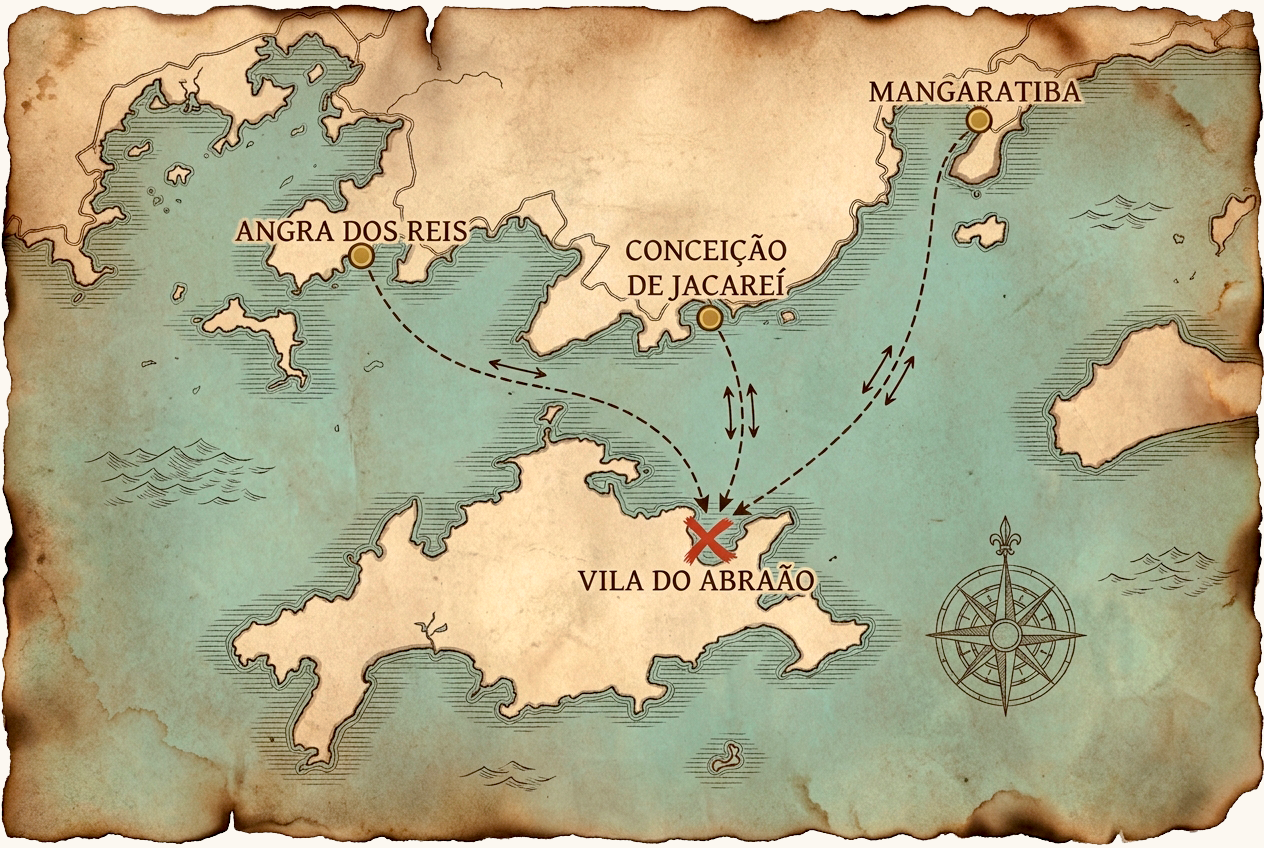
Ilha Grande can only be reached by boat, and almost everyone arrives at the same place: the pier in Vila do Abraão, the island’s main village. There are no cars, no bridges and no airport — which is exactly why the island still feels wild.
From the mainland, boats leave from three ports: Conceição de Jacareí (shortest crossing, easiest from Rio), Angra dos Reis (calmest waters, most boats) and Mangaratiba (closest to Rio by road, but the roughest sea). If you are coming from Rio de Janeiro, the most comfortable route is a shared van + speedboat transfer straight to Abraão (around 3.5–4.5 hours, ~R$200 per person). The cheapest is the Costa Verde bus + speedboat. Below you’ll find every option, by where you’re starting from.
🧭 Coming from abroad via Rio? We have a separate guide with the traveller’s verdict: the transfer trap on the way back, paying by Pix (and why there’s no ATM on the island), and how many nights to stay → Rio de Janeiro to Ilha Grande.
Quick guide
If you’re in a hurry, here’s the short version by starting point:
| Coming from | Easiest route | Time | Rough cost (pp) |
|---|---|---|---|
| Rio de Janeiro | Shared van + speedboat transfer | ~3.5–4.5 h | ~R$200 |
| Rio (budget) | Costa Verde bus + speedboat | ~4–5 h | ~R$70–80 + ~R$100 |
| São Paulo | Bus to Angra dos Reis, then boat | ~7–9 h | varies |
| Paraty | Bus to Angra dos Reis, then boat | ~2.5–3 h | ~R$15–18 + boat |
| Mangaratiba | CCR ferry to Abraão | ~1h10–1h30 | ~R$20 (ferry) |
Prices are approximate and change with the season — treat them as a guide, not a quote.
Where are you coming from?
- From Rio de Janeiro — the three ways
- From São Paulo
- From Paraty
- From Mangaratiba
First, how Ilha Grande works
A few things worth knowing before you pick a route:
- You always cross by boat. Your final stop on the mainland is one of the three ports above; from there a boat takes you to Abraão.
- Boat types you’ll hear about:
- Barca (CCR ferry): the big, slow, cheap public ferry. Comfortable and stable, but few daily departures.
- Flex Boat / lancha (speedboat): fast and frequent — the usual choice. A bit pricier than the ferry.
- Escuna (schooner): mostly for day tours around the island, not transport to it.
- Taxi boat: small private boats — use only as a last resort (see tips below).
From Rio de Janeiro
Three ways, from most comfortable to most economical.
Option 1 — Shared transfer (van + speedboat) · recommended
A shared van does the road part and a speedboat does the sea crossing, taking you all the way to the pier in Vila do Abraão.
- Rough price: ~R$200 per person (includes a backpack and carry-on); large suitcases usually cost extra.
- Approximate pick-up windows in Rio: early morning (~05:45–07:45), mid-morning (~08:00–10:45) and early afternoon (~12:30–14:30).
- Why it’s the easiest: door-to-pier, no changes to figure out on your own.
Many pousadas in Abraão can pre-book this transfer for you. (Full disclosure: I run one of them, Pousada CostaVerde — more on that at the end.)
Option 2 — Uber to Conceição de Jacareí + speedboat
- Take an Uber from your hotel in Rio straight to the pier at Conceição de Jacareí (~R$250–300, depending on traffic and time).
- Buy a speedboat ticket on the spot to Vila do Abraão (~R$100). The crossing from Conceição is the shortest — about 15 minutes by speedboat.
Option 3 — Costa Verde bus + speedboat · cheapest
- Take the Costa Verde bus from the Novo Rio bus station (~R$70–80).
- Get off at the Angra dos Reis bus station or at Conceição de Jacareí, depending on the schedule.
- From there, take a speedboat to Vila do Abraão (~R$100).
From São Paulo
There’s no direct boat from São Paulo, and honestly it’s the least convenient starting point. Most people who come this way either take a long bus or — better — spend a couple of days in Paraty first and cross from there.
- By bus: Viação Reunidas Paulista runs direct buses from the Tietê terminal (Metro Portuguesa-Tietê, Blue Line 1) to Angra dos Reis — around six a day, roughly 7.5 hours, from about R$80. From the Angra bus terminal it’s a short hop to the Santa Luzia pier for the speedboat to Abraão.
- Time it right: the last boats from Angra to the island leave around 17:30–18:00. The clever move is the overnight bus (leaves São Paulo ~22:00, reaches Angra ~07:00), so you arrive with a full day to make the crossing.
- Via Paraty: many travellers take a direct bus to Paraty, enjoy a day or two, then continue to Angra and across — see From Paraty.
From Paraty
Paraty is a common stop on the same coast, so this route is short:
- Take a bus from Paraty to Angra dos Reis — local buses run roughly every 30 minutes (~2 hours, ~R$15); there are also a couple of daily tourist buses (~R$18).
- From Angra, take a ferry or speedboat to Vila do Abraão.
From Mangaratiba
Mangaratiba is the closest port to Rio by road, served by the CCR Barcas public ferry:
- Crossing: about 1h10–1h30.
- Schedule: typically one daily departure in the morning (~08:00), returning in the late afternoon (~17:30).
- Heads up: this stretch of sea is often choppy — not ideal if you get seasick.
- Parking is available near the pier if you’re driving.
The mainland ports at a glance
| Port | Distance from Rio | Crossing to Abraão | Best for |
|---|---|---|---|
| Conceição de Jacareí | ~135 km | ~15 min (speedboat) | Shortest crossing, easiest from Rio |
| Angra dos Reis | ~150 km | ~20–30 min (speedboat) / ~1h30 (ferry) | Calm waters, most frequent boats |
| Mangaratiba | closest by road | ~1h10–1h30 (ferry) | Drivers from Rio (rougher sea) |
A few local tips that save trouble
If you continue to Paraty afterwards (or to São Paulo, Ubatuba or Ilhabela): don’t buy a round-trip ticket in Conceição de Jacareí. Buy a one-way ticket. When you leave the island it’s most convenient to head to Angra dos Reis and continue from there — you pass through Angra anyway.
Avoid taxi boats in Conceição. Always prefer the regular Flex Boat speedboats. Taxi boats often charge as if it were a round trip, let in a lot of spray on the way, and are frequently not properly regularised (they belong to a different municipality). Use one only if there’s genuinely no Flex Boat availability.
Taxa Viva Angra. Remember the environmental access fee, paid online via QR code — keep the confirmation on your phone.
Booking the shared transfer
The shared van + speedboat transfer is usually arranged through a pousada in Abraão. In the interest of full transparency: this guide is written by Ricardo Aparicio, who lives on the island and runs Pousada CostaVerde — so if you’re staying with us we can book the transfer for you, and if you’re not, any reputable pousada can do the same. Either way, the route information above is the same.